FROM A SACRED PLACE TO A WORKABLE PLAN
Plan your Catholic pilgrimage.
Choose the task that will help you move forward. Start a destination summary, find practical guidance or take a free resource with you. You can use every tool without an account.
Build my plan: choose a destination and open its summary. Find a guide: search by place and question. Get a printable resource: choose a planning sheet or route packet for your own notes.
ONE PLACE TO PICK UP THE JOURNEY
My pilgrimage plan
Choose a destination to see its planning summary, day framework, practical guides and next steps. Use the budget and checklist for the same journey. Include a saved worksheet only when it belongs to this journey.
Nothing has been saved. Your selection stays in this page until you choose to save.
How saving works
Saving is optional and manual, in this browser only. Save changes inside each tool. This summary reads those saved copies, not unsaved edits. No account, syncing or automatic backup. Do not save on shared devices. Print selections are used only in this page. Privacy details.
Remove only the saved destination? Your budget, checklist, comparison and route copies will remain.
THE PLANNING LIBRARY
Find a guide for your next question.
Search the guides and tools, or narrow the list by destination and type. General planning advice remains available with every place. You can also use the direct destination and tool links without searching.
General planning advice and tools remain available with every destination or country. Search narrows the words shown as well.
Prayer planning
Fátima Mass times: find the right celebration ↗
Read Fátima's official programme by date, language and venue. Choose Mass and Rosary that fit your visit, and recognize when an anniversary programme changes the day.
Arrival guide
Porto to Fátima: bus, train and a workable visit ↗
Compare Porto city and airport coaches with rail plus a road transfer. Choose a return journey that leaves room for prayer, a meal and a manageable pace.
Planning dates
Best time to visit Fátima and Lourdes ↗
Choose dates for Fátima and Lourdes around the prayer and gatherings that matter to you. Compare the procession season, winter visits and weather tradeoffs.
Itinerary
One or two days in Lourdes ↗
Build a Sanctuary day around the Grotto, Mass, meals and rest; add Bernadette's town and choose a gentler route when needed.
Itinerary
One or two days in Assisi ↗
Give Francis and Clare a hilltown day, then add San Damiano and the Porziuncola with time for prayer, transfers and rest.
Itinerary
A day or overnight in La Crosse ↗
Choose a full shrine day, one night or two, with Mass, prayer, meals and a planned hill approach and return.
Plan the visit
Rome’s four papal basilicas: a pilgrimage in three days ↗
Visit Rome’s four papal basilicas over three manageable days, with prayer, meal breaks, transport decisions, optional visits and a slower alternative.
Plan the visit
Lourdes’ baths and water gesture: choose a meaningful visit ↗
Understand Lourdes’ baths and water gesture, individual booking rules, conflicting timetables, assistance questions and a practical day around the visit.
Santiago arrival
Santiago after the Camino: let the arrival take a day ↗
Plan your first day in Santiago after the Camino: luggage, Compostela collection, Pilgrim’s Mass, accommodation nights, companions and onward travel.
Celebration planning
Fátima on the 12th and 13th: give the gathering its own trip ↗
Choose Fátima anniversary dates or an ordinary stay, compare one to three nights, and plan the late evening, accommodation and return transport.
Celebration planning
How to attend a papal General Audience ↗
Request free General Audience tickets through the official Vatican portal, plan collection and entry, and give the event room within a Rome pilgrimage.
Arrival guide
Your first day in Rome begins at the airport ↗
Choose Fiumicino or Ciampino transfers around your Rome pilgrimage base, plan luggage and late check-in, and keep the first day manageable.
Arrival guide
Lourdes without a car: arrive, settle, return ↗
Plan Lourdes without a car: Paris trains, airport shuttles, local transfers, accommodation areas, luggage, first-day choices and the return journey.
Practical guide
Rome to Assisi by train: tickets and the hilltown transfer ↗
Choose Assisi or Assisi Centro, understand regional ticket formats and connect the train with the hilltown, luggage and a realistic return.
Practical guide
Where to stay for a Champion pilgrimage ↗
Compare Green Bay, airport and rural bases for Our Lady of Champion, choose one or two nights, and plan transport, meals and a manageable shrine day.
Practical guide
La Crosse by train: a shrine overnight that works ↗
Plan a La Crosse shrine visit by Amtrak: compare one or two nights, accommodation areas, local transfers, the uphill approach and your return train.
Arrival guide
Lisbon to Fátima: day trip or overnight? ↗
Compare city and airport arrivals, coach terminals, overnight bases and the complete return journey.
Itinerary
Two days in Fátima ↗
Choose nights, fit Aljustrel around opening periods and keep a shorter plan for weather or fatigue.
Regional itinerary
Wisconsin: Champion & La Crosse ↗
Choose one shrine or both, plan overnights and get the free route worksheet.
Find a stay
Find a stay ↗
Compare destination-area hotel searches on Expedia, with practical room and route checks, direct-provider alternatives and clear paid-link labels.
Worked example
A complete worked pilgrimage plan ↗
Follow a fictional couple from choosing Lourdes to usable days, room criteria, an artificial-price teaching budget and a summary with open questions.
Prayer and reflection
Before, during and after: prayer and reflection ↗
Write a private intention, use optional daily prayer prompts and choose one small practice to carry home. Keep your answers in your own notes.
Companion worksheet
Planning a pilgrimage with companions ↗
Agree on pace, spending, quiet time, optional visits, meeting arrangements and booking responsibility before committing to the journey.
Start here
Your first Catholic pilgrimage ↗
Choose an intention, realistic time and a manageable first journey.
Tool
Compare destinations ↗
Compare destinations or use the short destination chooser.
Planning guide
Independent pilgrimage or organized tour? ↗
Decide who arranges bookings, changes and spiritual support.
Itinerary
Rome–Assisi: 9–11 days ↗
Compare route lengths, overnight bases and the free packet.
Tool
Budget planner ↗
Use your own quotes for group totals and cost per person.
Tool
Pilgrimage preparation checklist ↗
Track preparation, explicitly save a device copy and print.
Planning guide
How to budget for a pilgrimage ↗
Count shared costs, individual costs and the whole journey.
Planning guide
Where to stay near a shrine ↗
Compare location, exact room access and cancellation terms.
Planning guide
Packing and church etiquette ↗
Prepare for actual walking, weather and respectful worship.
Destination
Our Lady of Champion ↗
Wisconsin day pilgrimage, official events and a free day sheet.
Destination
Our Lady of Guadalupe, La Crosse ↗
Plan the uphill church approach, prayer and return journey.
Destination
Santiago de Compostela ↗
Cathedral visit or Camino arrival: distinguish the two plans.
Destination
Rome and the Vatican ↗
Papal basilicas, transport and a city pilgrimage.
Destination
Assisi ↗
Francis, Clare and Carlo Acutis; hill town or valley base.
Destination
Lourdes ↗
The Grotto, Marian prayer and the sanctuary program.
Destination
Fátima ↗
The Rosary, the shepherds and a sanctuary-centered stay.
Destination
Knock, Ireland ↗
A Marian and Eucharistic pilgrimage in County Mayo: prayer, places to visit, mobility support, and a day or overnight.
Arrival guide
Getting to Knock without a car ↗
Plan Ireland West Airport or Dublin rail arrival, the final Claremorris transfer, accessible transport, and your return.
Itinerary
A day or overnight at Knock ↗
Give Mass, chapel prayer, meals, and rest enough time; choose an overnight and a village base when they help.
Destination
Our Lady of Guadalupe, Mexico City ↗
Plan a pilgrimage to the Basilica and Tepeyac, with room for the tilma, worship, and a gentler visit.
Arrival and accommodation
Getting to Guadalupe and where to stay ↗
Choose a Mexico City arrival, accommodation base, and complete sanctuary transfer without confusing the city’s airports.
Itinerary
One or two gentle days at Guadalupe ↗
Choose a one-day sanctuary visit or a slower two-day plan, with optional hill chapels, meals, prayer, and a level alternative.
Destination
Walsingham, England ↗
Plan shrine prayer, a manageable day, accommodation and the connection between the Catholic shrine and the village.
Arrival and accommodation
Getting to Walsingham and choosing where to stay ↗
Plan the last rural connection, distinguish the Catholic shrine from the village, and choose accommodation around your actual journey.
Itinerary
A day or overnight at Walsingham ↗
Give shrine prayer, worship, meals and rest enough time, keep the village visit optional, and choose an overnight when it helps.
Destination
Częstochowa & Jasna Góra ↗
Make room for the image of Our Lady, monastery worship, a practical city arrival and time to return to prayer.
Arrival and accommodation
Getting to Częstochowa and choosing where to stay ↗
Choose your city arrival and a useful base, then plan the route to Jasna Góra, room access and your return journey.
Itinerary
One or two days at Jasna Góra ↗
Shape chapel prayer, Mass and optional visits around a working monastery, with breaks and room for a slower second day.
No matching guide or tool. Try a broader search or select Show everything to reset the filters.
A USEFUL PAUSE BEFORE YOU PAY
Check the decisions before booking.
Count the nights, check the full arrival and return journey, agree on the daily pace and confirm the arrangements that matter for your visit. Use provider information for your dates before committing.
Time
Write down arrival, usable days and departure. Add transfers, meals and rest before another destination.
Check the pace ↗Access
Confirm the exact room, entrance and last leg of the journey. Keep a shorter alternative for a tiring day.
Ask better room questions ↗Cost & responsibility
Keep the whole cost, cancellation deadline and person responsible for each booking together.
Choose your travel structure ↗Planning with someone else? Agree the plan with your companions: pace, spending, quiet time and who handles each booking.
This is a planning prompt. No personal answers are collected here.
Take a planning resource with you.
Choose the sheet that fits your journey. Add your own confirmed details and check the source dates before travel. A downloaded file can be kept on your device; following its links still requires a connection.
AN OLDER WAY OF PAYING ATTENTION
A little less hurry.
A little more attention.
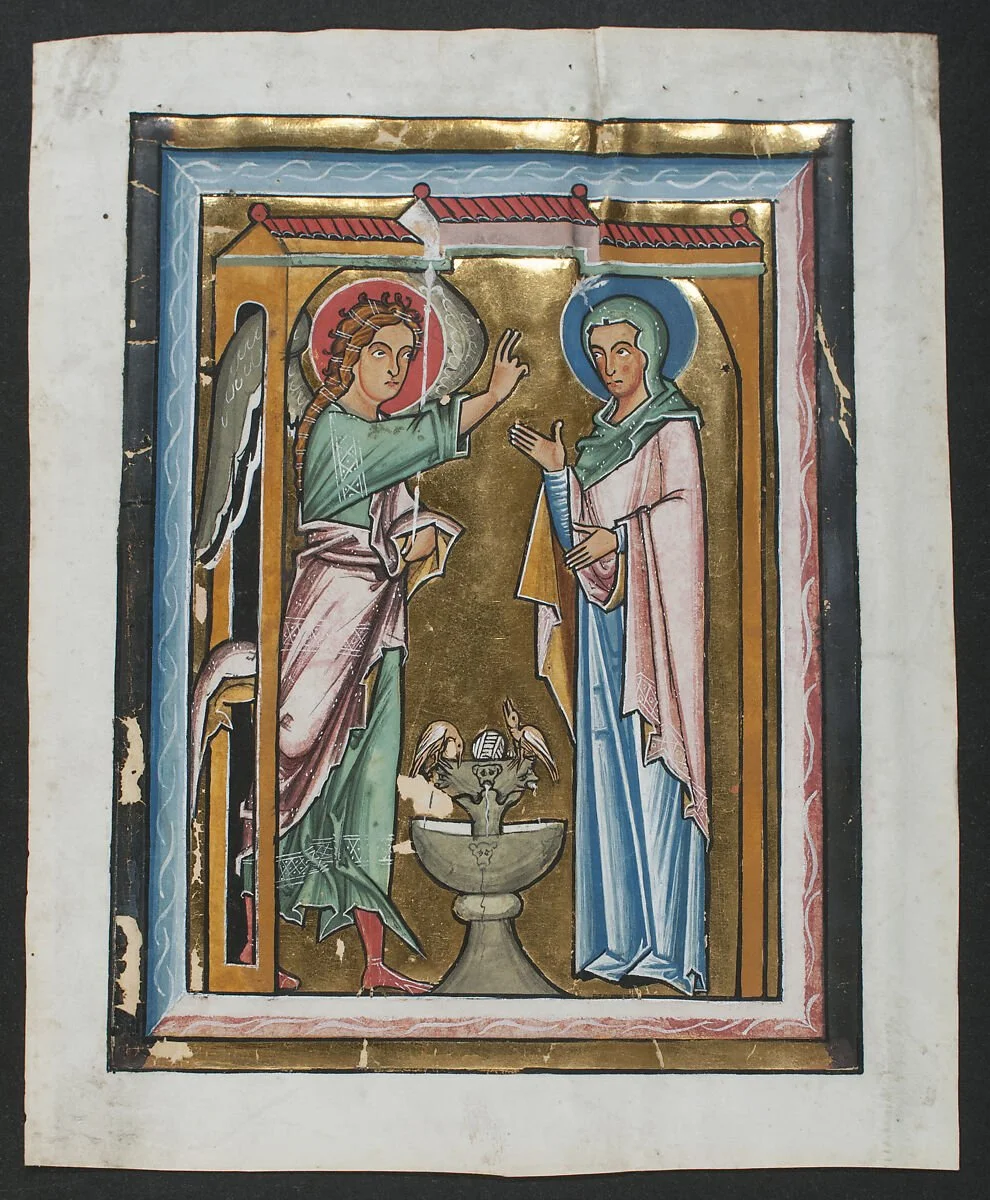
This medieval page was made to accompany prayer. Its image of the Annunciation invites a pause before the next words.
Let your journey have that kind of space: a church you return to, a prayer you carry, an afternoon that remains open.
Begin with an intention ↗