ROME / GET TO THE ROOM, THEN BEGIN
Your first day in Rome begins at the airport
Leave the first great basilica visit for a day when you can be present for it. After a flight, the useful plan is smaller: clear the airport, reach the right address, put down the bags, eat, and find one nearby place to pray if energy remains.
Here is how to choose an airport transfer around a pilgrimage base, keep a late arrival workable, and decide what belongs on the first day. Fiumicino and Ciampino need different plans.
Researched guidance · 26 September 2026
First, read the airport name
Fiumicino (FCO) and Ciampino (CIA) are different airports. Copy the name from your flight confirmation into the arrival note and repeat the check for departure. A return booking can use a different airport from the arrival.
Next, write the accommodation’s exact address, reception hours and contact details. “Vatican area” or “central Rome” is not enough for a transfer quote. Ask the property for the last part of the route with luggage and where a car can stop.
Keep three times separate: scheduled landing, being ready to leave the terminal, and arrival at the room. Border formalities where applicable, baggage, assistance, finding transport and the final connection sit between them. Do not build an essential museum or liturgy reservation around the landing time alone.
Fiumicino: decide where the train leaves you
Trenitalia’s Leonardo Express links Fiumicino Aeroporto with Roma Termini, with a published non-stop journey of 32 minutes. That is the rail segment, not the time from aircraft door to guesthouse. Add reaching the station, waiting and the journey beyond Termini.
For a room near Termini or Saint Mary Major: compare the actual station-to-room route. Walking may be practical for some addresses; other travelers will want a local vehicle for bags, distance or access needs. Do not choose a room on the assumption that every street described as “near Termini” has the same approach.
For Borgo or Prati: Termini is a connection point. Add a suitable onward metro, bus or taxi journey to the exact address, including the final walk. Compare that complete journey with a direct road-transfer quote. The airport train is not a direct service to Saint Peter’s.
Trenitalia also lists the FL1 regional service. Investigate it when its offered stations fit your accommodation better, but inspect the actual station sequence and any required changes in the dated search. Do not treat all airport trains as interchangeable.
Use current journey results for the first or last usable train. General pages and older downloadable timetables can disagree on late services; your evening arrival needs a checked connection and an alternative if the flight is delayed.
Ciampino: the rail option includes a bus
Ciampino Airlink combines a bus between the airport and Ciampino railway station with a train onward to Roma Termini. Trenitalia instructs travelers to choose Ciampino Aeroporto as the origin or destination for the combined journey.
The airport and the railway station are separate places. Read both legs and allow for the interchange with bags. A search to “Ciampino” alone may not describe the airport journey you intend.
At Termini, continue to the room using the same address-based comparison as for Fiumicino. A low airport-transfer fare can still mean two changes and a final walk; decide whether that is reasonable for the people arriving.
If you choose an airport coach or direct car instead, confirm the specific operator, arrival stop, operating hours and final connection. Do not apply Fiumicino directions or prices to Ciampino. Check current airport transport information through Aeroporti di Roma and the chosen provider.
When a direct car earns its place
A direct road transfer is worth comparing when several people share the vehicle, bags are difficult to manage, arrival is late, or the room requires an awkward change. It trades interchange work for a road journey whose duration depends on conditions.
For an official taxi, follow airport signs to the authorized rank and confirm the applicable tariff for the exact address and party before starting. A price described as “central Rome” should not be assumed to cover every Vatican-area or outer-city address.
For a prearranged transfer, obtain the complete quote and meeting instructions. Specify the flight, passenger and bag count, child seats or equipment if needed, and ask how delays, waiting time and cancellation are handled. Confirm vehicle suitability directly; the word “transfer” does not establish accessible boarding.
Compare like with like in the budget planner: all passengers’ rail or coach tickets plus onward transport versus the full vehicle quote. Count the vehicle once when a quote is per car. This guide does not publish a taxi fare or endorse a driver.
Check-in is the hinge of the day
Morning arrival: ask whether the accommodation can hold bags before the room is ready. If confirmed, leave them, eat and choose a short activity near the property. Early room access is a separate request; an early flight does not create it.
Afternoon arrival: complete check-in and learn the immediate neighborhood. Find a meal, the return entrance and any guesthouse evening arrangements before going farther away.
Late arrival: get explicit instructions for reaching the room after reception closes. Know whom to call if the flight or transfer runs late. Confirm food options instead of attaching a cross-city church visit to an already long day.
No confirmed luggage arrangement: solve it before making sightseeing plans. Saint Peter’s official visitor guidance states that it has no luggage storage. A suitcase should not be the reason you cannot enter the place you came to visit.
Three first-day plans that can shrink
Vatican-side room
Reach the accommodation, leave bags and have a meal. If you feel well enough, learn the route toward Saint Peter’s Square and back. Treat entry to the basilica as optional around the actual opening and worship arrangements. Save the main prayer visit for the next full day, with security and time inside allowed for.
Saint Mary Major or Termini-side room
Settle first. Consider a short visit to Saint Mary Major if current access and your energy permit; otherwise, learn the route for tomorrow. Avoid turning this into the first half of a two-basilica itinerary merely because the church is near the room.
Arrival after a demanding journey
Eat, shower or rest, and prepare the next morning’s small essentials. A quiet prayer in the room can be the pilgrimage’s beginning. Leave the city’s great spaces for a day when fatigue is no longer making every decision.
In all three versions, one optional visit is enough. The Rome destination guide gives the subsequent basilica days and separates ordinary entry, museum tickets and papal-event arrangements.
If Assisi comes next
Keep the airport arrival and the Rome–Assisi transfer as separate planning decisions. Going directly to Assisi adds an intercity journey and a valley-to-room connection after the flight. Check the whole chain and late check-in before deciding it is a saving.
For a first Rome–Assisi pilgrimage, the combined route begins with Rome nights and counts arrival as a travel day. Use the train-and-luggage guide when it is time to change bases.
Before the return flight, work backward from the airline’s required airport arrival time, including the room-to-transport journey and any early-hour limitations. The first-day transfer is not automatically the best departure plan. Compare the final Rome night’s location separately.
Bring the decisions together
Rome destination guide · Pilgrimage preparation checklist · Start a plan for Rome · Budget planner
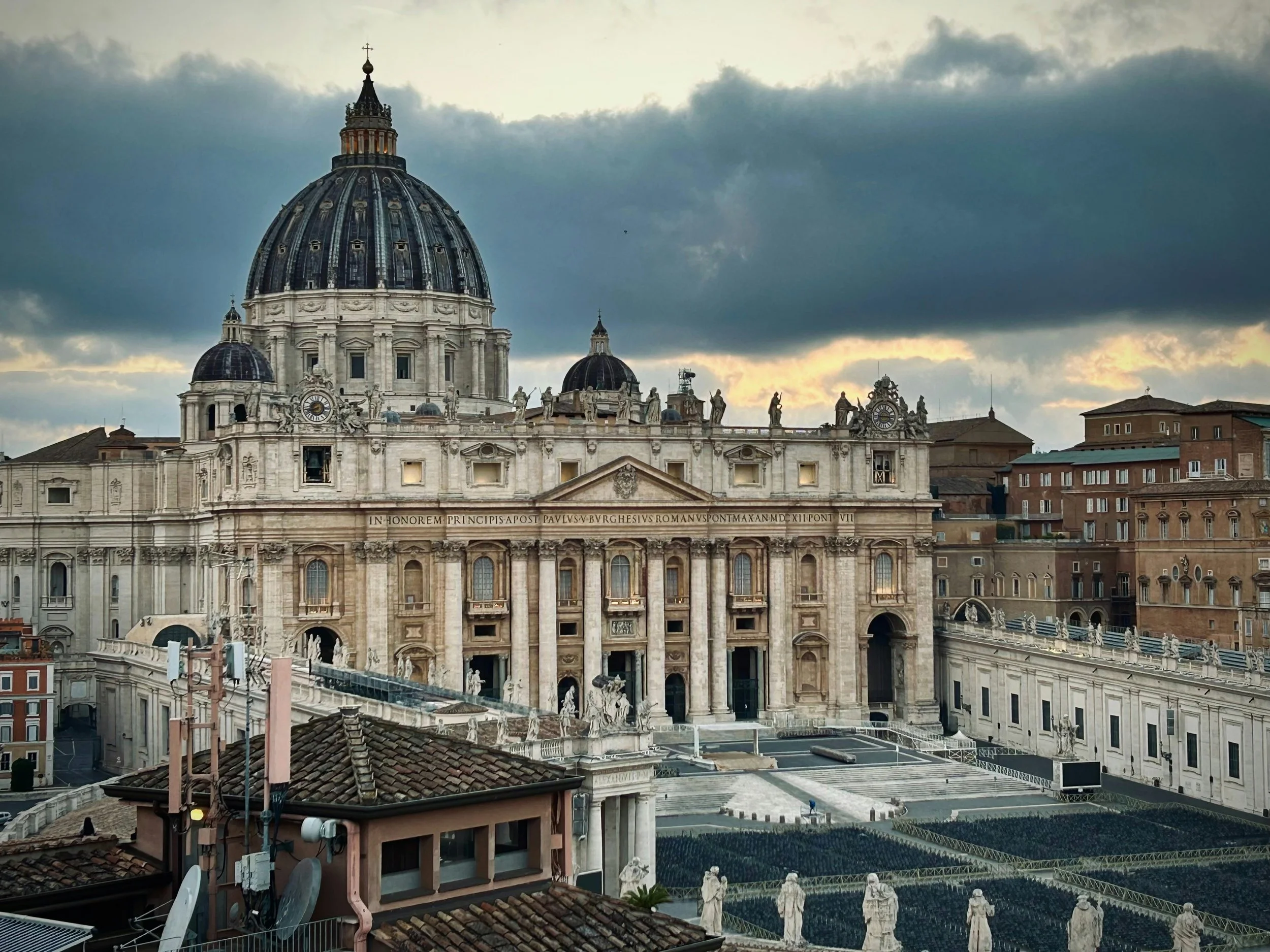
Photo by Alkesh Antony on Unsplash.
Independent editorial guidance researched 26 September 2026. No firsthand visit, hotel inspection or transport booking is claimed. Confirm changing schedules, room features, assistance and prices directly. Current links are ordinary, non-affiliate links.