ROME / FOUR PLACES, FOUR DIFFERENT PAUSES
Rome’s four papal basilicas: a pilgrimage in three days
Rome’s four major papal basilicas are Saint Peter’s, Saint Mary Major, Saint John Lateran and Saint Paul Outside the Walls. Ordinary church entry is free; optional tours, museum areas and Saint Peter’s dome are separate experiences. Allow for security, worship and changes to visitor access.
Our suggested pilgrimage gives Saint Peter’s its own morning, pairs Saint Mary Major with the Lateran around a proper break, and reaches Saint Paul on a separate day. This is an editorial three-full-day plan for prayer, art and ordinary visits. Arrive the evening before and leave the morning after: that is four nights. Add time for the Vatican Museums, a papal audience or a slower pace rather than squeezing those experiences into the gaps.
Editorial update · 10 October 2026 · Entry and transport sources checked 10 October 2026
Choose the pace before choosing the extras
Four basilicas: ordinary entry and useful arrival points
These station choices help you start planning; they are not basilica entrances or a promise of a step-free journey. Opening windows can change for worship and events. Check the day’s notices before setting a fixed arrival time.
| Basilica and arrival | Entry and opening guidance |
|---|---|
| Saint Peter’s Ottaviano–San Pietro · Metro A | Free ordinary entry; paid reservation and tour services are optional. Current hours: 7 a.m.–8 p.m. Last entry is 7:15 p.m., subject to visitor flow and security queues. |
| Saint Mary Major Termini · Metro A/B, then a street approach | Free ordinary entry. The official English and Italian visitor pages disagree on closing time. Plan a daytime visit and confirm current hours. |
| Saint John Lateran San Giovanni · Metro A/C | Free ordinary entry: 7 a.m.–6:30 p.m. The basilica warns that hours may change. Museum, cloister, baptistery and palace hours are separate. |
| Saint Paul Outside the Walls Basilica San Paolo · Metro B | Free ordinary entry. The official timetable gives 7 a.m.–6:30 p.m.; another official page gives a 7 p.m. close. Use a daytime visit and confirm the day’s closing time. |
Arrival points use ATAC’s maps, Saint Peter’s directions and Saint Paul’s directions. The detailed day sections below distinguish ordinary visits from optional extras.
Three full days: use the sequence below, with two basilicas on the middle day and one on each of the others. Keep afternoons after Saint Peter’s and Saint Paul flexible. Reorder the days around the actual worship program and any special event.
Four full days: separate Saint Mary Major and Saint John Lateran. This removes the pressure to make a second substantial visit after lunch. Alternatively, retain the three-day pattern and use the fourth day for a reserved museum visit.
Two full days: choose Saint Peter’s and the basilica most closely connected to your intention, then add another only if the days remain comfortable. All four may be possible for some travelers, but making that a requirement leaves less room for prayer, queues and rest. A shorter selection can still be a complete pilgrimage.
The sites have different meanings: Peter and Paul connect the journey to the apostles, the Lateran is Rome’s cathedral, and Saint Mary Major gives it a Marian focus. Read the destination guide’s history and sacred-place notes before deciding what matters most to you.
Day one: Saint Peter’s, with an afternoon you can change
Have breakfast before the approach and allow time for screening. Decide whether the morning’s purpose is worship, an ordinary visit or a reserved experience. Those choices can involve different instructions; follow the basilica’s current entry arrangements.
The official FAQ, checked 10 October 2026, confirms free ordinary admission and an optional paid timed-entry service that includes a digital audio guide. A booking does not remove the need to read security and arrival instructions. Do not buy a package merely because its wording makes ordinary entry sound unavailable.
The basilica’s opening notice now lists 7 a.m.–8 p.m., in effect from 1 June 2026, with last entry by 7:15 p.m. depending on visitor flow and security waiting times. An evening arrival is not assured merely because it falls before closing. Check special-event arrangements and allow an earlier approach.
Inside, leave a quiet interval before beginning a circuit of the building. Choose a small number of places to notice rather than trying to absorb every monument. If attending Mass, confession or adoration, use the separate worship information. Dedicated worship access is for that purpose; follow its exit instructions rather than treating it as a sightseeing shortcut.
Afterward, leave time to exit and have lunch. Return to your accommodation if the morning has been demanding. A short walk or a quiet second visit can remain optional. Choose the dome only if its specific physical requirements and the day’s energy fit; it is a separate experience.
The Vatican Museums have their own entrance and booking. Giving them another half-day prevents the basilica from becoming a task to finish before a timed ticket. If an audience is central to the trip, use the audience guide and move this basilica day around the confirmed event.
Day two morning: Saint Mary Major
Begin with a settled visit to Saint Mary Major rather than arriving with one eye on the next transfer. Choose prayer, the principal interior and any particular place of devotion you came to see. If a specific liturgy matters, start with the basilica’s current celebrations page, which distinguishes weekday and Sunday arrangements.
Ordinary basilica entry is free. Closing times differ between its official English and Italian visitor pages as checked on 10 October 2026, so this guide does not choose one as a reliable evening arrival window. Use the official contact information to confirm current hours if your visit depends on a late arrival. The morning plan here leaves room for that uncertainty.
The official visit site separates the museum complex, archaeological area and other tours. Decide whether an extra is genuinely a priority. Adding a substantial tour here is a reason to move the Lateran to another day, not to shorten lunch.
For access, the basilica’s official guidance describes an entrance ramp, mobile ramps for side chapels and a lift to museum areas; it directs visitors to ask staff about ramp availability and to contact the museum about terraces and archaeology. Confirm your exact route instead of treating that list as a guarantee for every space.
After the visit, eat before the next journey. Check the transfer from the place where you actually finish, not just from the basilica’s map marker. A return to the room may be the better middle-of-day choice if fatigue or heat makes the second visit less inviting.
Day two afternoon: the Lateran, with permission to stop
Travel to Saint John Lateran after the break. Take the building on its own terms as the cathedral of the Bishop of Rome. Let this visit have a different intention from the morning: belonging to a local Church, baptism, or the people who helped form your faith.
The official visitor page, checked 10 October 2026, lists free basilica entry from 7 a.m. to 6:30 p.m. and warns that hours may change. Its museum, cloister, baptistery and palace use separate timetables.
Choose at most one nearby addition after the basilica. The baptistery can give the afternoon a baptismal focus. The Scala Sancta is another distinct visit with its own conditions; do not assume the basilica’s closing time applies to it. Consult the linked official information for the actual place you choose.
If the morning ran long, drop the extra before dropping the break. If the second basilica itself now feels rushed, move it to an open afternoon or a fourth day. Decide this while sitting at lunch, before beginning a transfer that feels compulsory.
Finish by returning to the room or choosing dinner near a route you can comfortably manage. Avoid adding a cross-city evening appointment simply because the map still has empty space on it.
Day three: Saint Paul Outside the Walls
Give the journey south its own morning. Confirm both the outward route and the return before leaving; this basilica should be a destination, not a quick detour on the way to the airport.
Saint Paul’s official timetable, checked 10 October 2026, lists free basilica entry from 7 a.m. to 6:30 p.m., while the hours on its Italian cloister page give a 7 p.m. basilica close. Confirm the day’s closing time directly rather than relying on the later figure. The cloister is a separate paid visit with its own hours. Check the current program if a liturgy is your anchor.
Begin with the apostle’s place of veneration, then spend time with the scale of the church and its papal portraits. Choose one question to carry here: what does this pilgrimage ask you to take home and put into practice? A period of attention can be more memorable than another photograph.
Choose the cloister if you want the additional visit, then eat and rest. Keep the afternoon for a missed basilica, a return to a place that mattered, or nothing scheduled. This open block is useful insurance against an earlier closure or a day when someone needed to stop.
For a gentler four-day version, give the Lateran its own day and move Saint Paul afterward. Recount the accommodation nights whenever a day is added: arrival plus four full days plus departure usually means five nights.
Plan the transfers as carefully as the churches
Use ATAC’s official maps to understand the network, then check current service for the exact journey. A schematic line on a map does not establish the closest entrance, a working lift or the time needed on foot at either end. Service changes can alter the best route.
Useful metro starting points: use Line A for Ottaviano–San Pietro and San Giovanni; Termini is the A/B interchange and a practical start for the street approach to Saint Mary Major. From Termini, Saint Paul’s own directions use Line B toward Laurentina to Basilica San Paolo. Check ATAC’s current journey information for your date. Add the station approach, street walk and entrance queue to the journey; these suggestions do not establish a travel time or lift availability.
For each day, write three legs: room to basilica, basilica to your meal or rest, and return to the room. The middle day adds Saint Mary Major to the Lateran. Include station approaches and any walking inside large buildings in your decision about what is manageable.
Compare public transport with a taxi or arranged ride when a long approach or interchange is the difficult part. Ask about the pickup point, luggage or mobility equipment and the full fare or quotation. A driver getting close to the basilica does not eliminate its entrance procedures.
Arriving through Termini does not make the churches suitable luggage stops. Saint Mary Major’s visitor rules say it has no cloakroom and that large bags or suitcases can be refused by security. Confirm storage before leaving accommodation with travel luggage.
Keep bags at confirmed accommodation storage while visiting. Wear clothing suited to church entry and carry what the current rules permit. For children or companions with different energy, agree which extra is optional and where to reunite. Use the packing and church-etiquette guide for the shared basics.
Book only what serves this pilgrimage
Set the dates and room first, with the actual arrival and departure counted separately. Then resolve an essential event or specialist visit. Keep ordinary basilica visits flexible around those confirmations instead of buying a timed product for every stop.
Compare the Rome accommodation areas against all three days. Vatican-side accommodation can simplify repeated Saint Peter’s visits; a transport-oriented base may suit the spread of journeys. The exact room, route and facilities matter more than the neighborhood’s reputation.
Budget for the full stay, local transport and any chosen extras. Prices belong to the current official booking pages; this route is not a package or a verified quotation. Enter your own figures in the budget planner.
For the bookends, use Rome airport arrival and Rome to Assisi by train. Keep the Assisi transfer as a travel day. The combined itinerary shows how these Rome days fit a longer pilgrimage.
Bring the decisions together
Rome destination guide · Pilgrimage preparation checklist · Start a plan for Rome · Budget planner
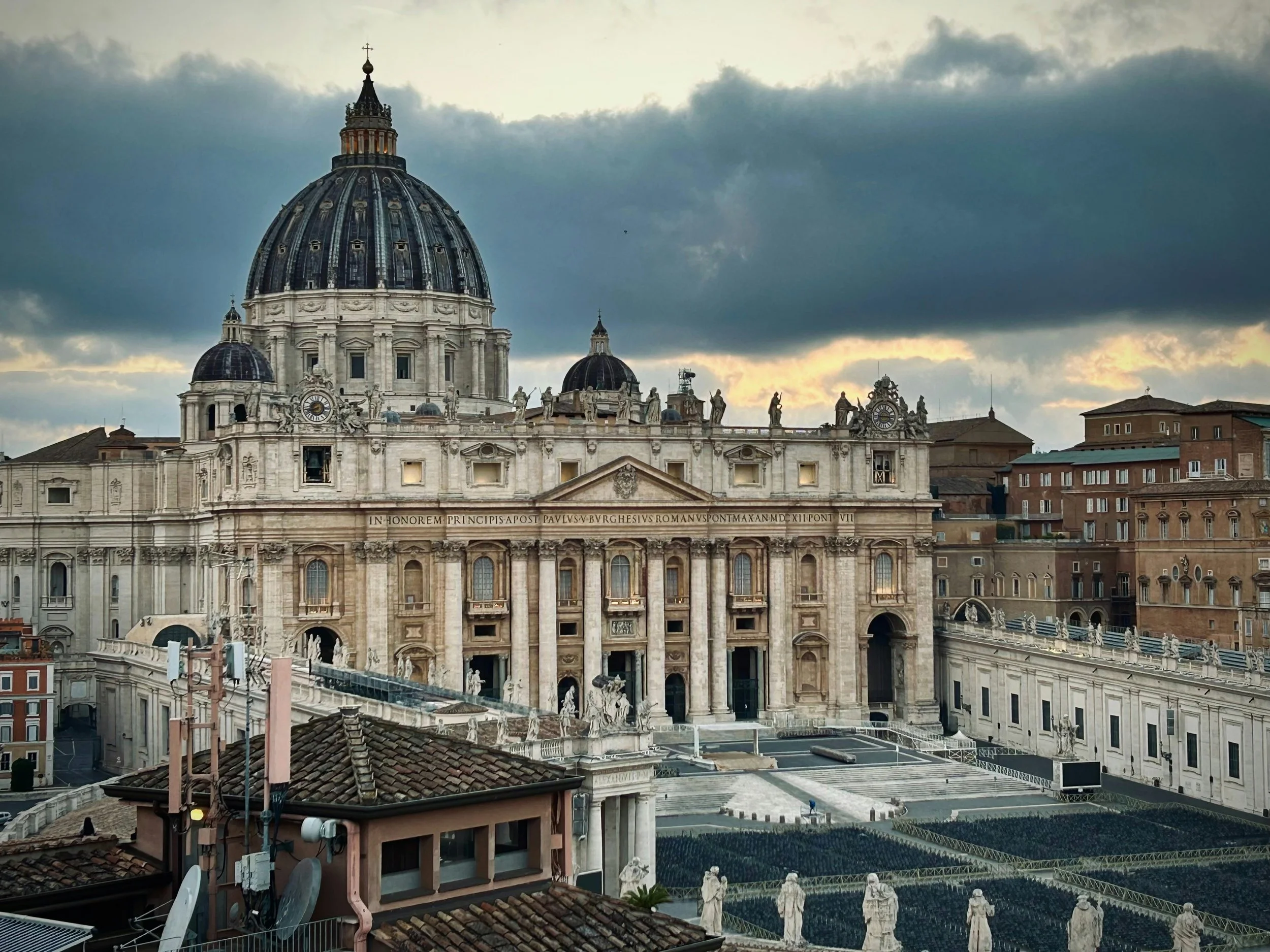
Photo by Alkesh Antony on Unsplash.
Independent editorial guidance originally researched 26 September 2026; editorial update and ordinary-entry/transport source checks 10 October 2026. No firsthand visit, hotel inspection or transport booking is claimed. Confirm changing schedules, room features, assistance and prices directly. Current links are ordinary, non-affiliate links.