GALICIA, SPAIN / THE WAY TO SAINT JAMES
Santiago de Compostela pilgrimage guide
Ordinary individual entry to Santiago Cathedral is free, and you do not need to walk the Camino to attend Mass. Museum, Pórtico of Glory, roof and tower visits have separate tickets. Start with one or two full city days, apart from arrival, departure and any walking stages.
Editorial update · 23 October 2026 · Cathedral visit and liturgy sources checked 11 October 2026

Visit Santiago—or walk there?
You can make a Catholic pilgrimage to Santiago without walking the Camino. Decide whether your journey is a stay around the cathedral, a walking route ending there, or a visit after someone else finishes their walk. Each needs a different calendar.
A cathedral-centered visit
Our suggested starting point is one or two full days in Santiago, with arrival and departure separate. Make room for Mass, prayer at the apostle’s shrine, a meal and an optional art visit. No walking-distance certificate is required to attend Mass.
A Camino ending in Santiago
Add the walking stages, travel to your start, rest and a stay after arrival. The one- or two-day suggestion in our comparison tool describes Santiago itself; it is not enough time for a qualifying Camino.
- Sacred focus
- Saint James the Apostle, the cathedral and the pilgrimage tradition.
- Suggested city time
- 1–2 full days, plus travel or Camino stages.
- First practical decision
- Your journey type, final arrival day and first night.
- Before entering
- Arrange storage for your backpack and check the current entrance.
Make worship the anchor of the visit.
The cathedral’s pilgrimage centers on the tomb traditionally venerated as that of Saint James. Arriving in the Obradoiro square can be a moment to pause; it need not become a race into the next queue. Choose one intention to bring into the church, whether your journey began that morning or weeks earlier.
Cathedral visit: what needs a ticket?
| Your activity | Entry and planning |
|---|---|
| Cathedral and sepulchre | Ordinary individual entry is free; no entrance ticket is required. The visitor entrance is Porta de Praterías, on Platerías Square. The usual opening window is 7 a.m.–9 p.m.; summer Saturdays close at 8:30 p.m. for the pilgrim vigil. Local notices take priority. |
| Pilgrim Mass | Choose worship separately from sightseeing. Check the time and venue for your date, including the announced 16 October change above. No Compostela is required to attend. |
| Museum, Pórtico, roofs or tower | Separate paid visits. Read the art-visit guidance below and the specific ticket’s route, timing and physical requirements before buying. |
| Compostela collection | A separate Pilgrim’s Office process at Rúa Carretas 33. Cathedral admission and a museum ticket do not settle certificate eligibility or reserve an office appointment. |
The cathedral visitor guidance prohibits backpacks, and its Spanish visitor page says sightseeing visits are not permitted during celebrations. Arrange agreed luggage storage, allow time to reach the entrance and make a separate visit if you want to explore the interior. A worship visit and a sightseeing circuit have different purposes.
The ordinary liturgy page lists Pilgrim’s Mass at 7:30 a.m., 9:30 a.m., noon and 7:30 p.m. These are local Santiago times; for visits from 16 October, use the announced venue change above and check for further notices. Attendance is not a seat reservation. Confession and language-specific celebrations have their own arrangements on the liturgy page.
The credential and the Compostela are different.
A Credencial records your pilgrimage through dated stamps. Obtain one recognized by the cathedral before setting out; the Pilgrim’s Office explains authorized sources. It is not a hotel reservation or a guarantee of a hostel bed.
The Compostela is a certificate awarded after an eligible pilgrimage. The current requirements specify a Christian purpose and at least 100 continuous kilometers on foot or horseback on a recognized route, including the final stage into Santiago; cycling requires at least 200 kilometers under the stated conditions. The rules also describe qualifying starts outside Spain and exceptional cases. Read the complete rules for your exact route rather than treating a distance on a map as approval.
For the minimum-distance journey, the office specifies dated stamps at the start and end of each stage. Contact it in advance about unusual routes or exceptional circumstances. A short walk or arrival by motor transport alone does not establish eligibility.
The reception office is at Rúa Carretas 33. Its published guidance uses a QR queue ticket and warns that same-day collection cannot always be guaranteed during busy periods. Keep departure arrangements flexible enough for the visit. Check the application and collection instructions ↗
Plan the last leg, the luggage and the room.
For an arrival by air, Aena lists bus line 6A between the airport and Santiago, with links to the operator’s current schedules and fares. Check your actual stop, the onward journey to your accommodation and the return service for your flight. Airport arrival is not cathedral arrival.
For any train, coach or car journey, confirm the exact arrival point and last leg with your operator and accommodation. Do not choose a tight liturgy or museum appointment immediately after an uncertain connection. On foot, make the arrival window a range rather than a promise.
Before booking a room, ask about luggage before check-in, the route from your arrival point, stairs or lifts to the exact room, and access at your expected arrival time. If an entrance or assistance is essential, ask the cathedral or museum about that specific visit. A compact historic center is not an assurance of step-free access.
A useful fallback is simple: reach your room, eat, rest and return for a later celebration or the next morning. A delayed arrival does not need to become a failed pilgrimage. Use our accommodation questions to compare two or three workable bases.
A first day with breathing room
Arriving after the Camino? Plan bags, the Compostela, worship and the first two nights.
YOUR ARRIVAL SEQUENCE
- 01
Settle
Store your bag, find the entrance and allow a pause.
- 02
Pray
Attend your confirmed liturgy or spend quiet time in the cathedral.
- 03
Recover
Eat, rest and leave the next visit optional.
With one full day: place Mass and cathedral prayer around a proper meal and rest. If seeking the Compostela, allow separate office time. Choose one additional visit only if the day still feels manageable.
With a second day: consider a reserved museum or Portico of Glory visit, then return to a place that mattered to you. This also gives a tired walker a less hurried departure. A second day is an editorial suggestion, not an admission requirement.
After a long walking stage: prioritize your body’s immediate needs and a settled night. Avoid making a prepaid art visit depend on finishing the stage faster than your comfortable pace.
Book art visits separately from worship.
The official cathedral ticket site offers different combinations for the museum, Portico of Glory, roofs and tower. Choose the experience you actually want and read its entry point, timing and physical requirements. A museum booking is separate from choosing a Mass.
Timed visits require punctual arrival. The ticket site also gives bag and photography restrictions. Its museum page identifies visitor reception at the Gelmírez Palace in Obradoiro Square. Use the instructions attached to your particular ticket, since access arrangements differ by visit. Museum visitor details ↗
Keep a roof or tower visit optional if stairs, heights or fatigue would make it unsuitable. Ask the operator before buying when a physical requirement is unclear. Prices and availability belong to the official booking page; this guide does not quote a guaranteed rate.
If you walk, build a separate stage plan.
The official Galicia Camino guidance recommends preparation and a flexible stage plan suited to the individual. Choose your route and season, then work out manageable distances, accommodation, meals, luggage and alternatives. A certificate’s minimum distance is not a recommendation for how far you should walk each day.
Count the complete trip in your budget: travel to the starting point, every walking night, meals, your Santiago stay, optional visits and the journey home. Add any luggage transfer or support you actually choose. Replace examples with current quotes and keep room for a changed plan.
This destination guide covers decisions for Santiago and points you to official Camino preparation. It does not substitute for a stage-by-stage route guide. If you want organized support, compare exactly what is included using our independent versus organized pilgrimage guide.
Before paying, resolve these four decisions.
- Purpose: a cathedral visit, a Camino, or a meeting after someone’s walk?
- Time: the full journey, with walking and arrival days separated from Santiago days?
- Arrival: a room, bag storage, the entrance and a workable return?
- Reservations: which art visits or support services genuinely need booking?
Put your chosen Mass time and venue, bag arrangement and optional paid visit into the plan. Keep the office visit separate if you are applying for a Compostela.
Use the preparation checklist next. Saving is optional and stays on your device. For other apostolic destinations, explore Rome and the Vatican; for a sanctuary-centered stay, compare Fátima and Lourdes.
Sources and review
Originally researched and reviewed 20 September 2026 by Plan My Pilgrimage. Cathedral visit/liturgy source checks: 11 October 2026. William Rasschaert’s personal Sarria–Santiago note was added 23 October 2026. The venue guidance was rechecked against the Cathedral’s official notice on 16 October 2026; confirm any further changes before traveling. Primary sources linked above: Santiago Cathedral (visits and liturgy), its official museum ticket office, the Pilgrim’s Reception Office (credential and Compostela), Aena and the Xunta de Galicia’s Camino guidance.
Suggested city days, arrival sequences and booking questions are our editorial planning advice. William Rasschaert’s personal experience is identified separately in the Sarria–Santiago note. We are independent of the cathedral and do not issue credentials, arrange bookings or decide certificate eligibility. Confirm changing arrangements with the responsible institution.
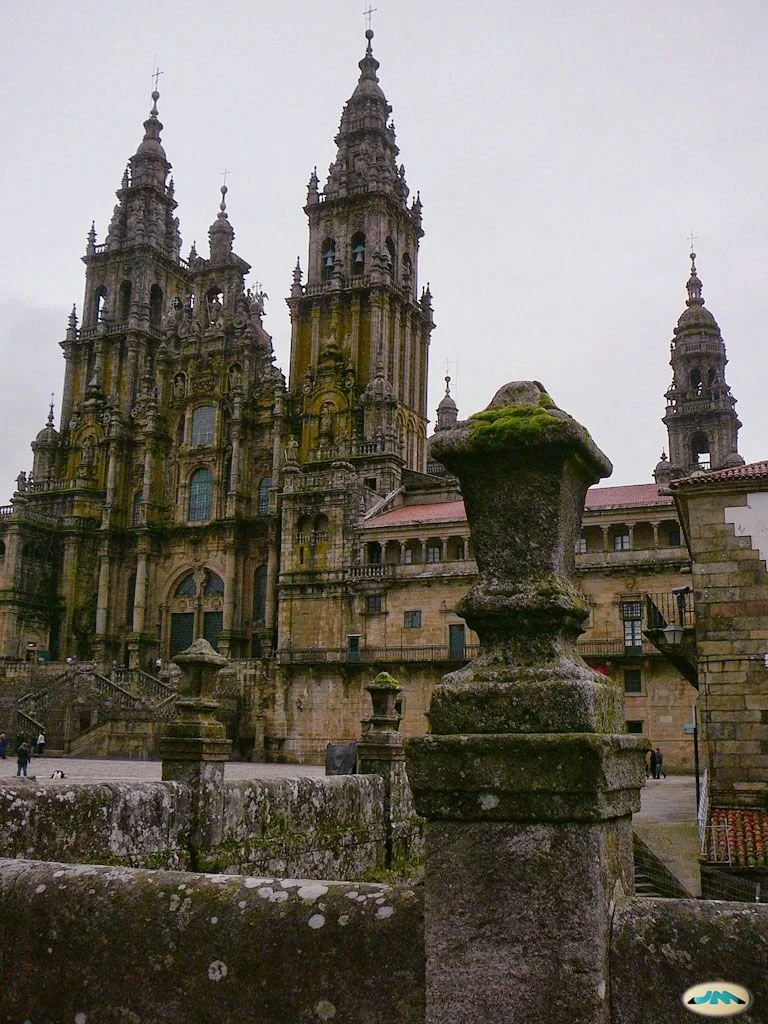
The regional overview marker uses the approximate cathedral-square location documented with the licensed photograph. It is an orientation point, not a visitor entrance or a Camino route. The photograph was taken in 2010; it does not establish present-day access or restoration conditions.