NORFOLK, ENGLAND
Walsingham Catholic pilgrimage guide
A medieval chapel in Norfolk. A living national pilgrimage. Find the Catholic shrine, choose your worship and decide whether to add the village.
Practical sources checked . Confirm schedules and access for your travel date.

- Time to give it
- One full shrine day; two nights protect it between long journeys
- Catholic shrine
- Houghton St Giles, south of the village
- Worship anchor
- Noon Pilgrim Mass, when confirmed
- Plan first
- The last transfer and the return
THE PILGRIMAGE BEGINS HERE
Begin with the right Walsingham
The Catholic pilgrimage begins at the Slipper Chapel and the Chapel of Reconciliation in Houghton St Giles, south of Little Walsingham. The village is part of the wider story, but arriving there does not put you at the Catholic National Shrine. Save both destinations before planning the day.
One full day gives you time for a Marian pilgrimage at the Catholic shrine. Staying in the village also lets you explore the earlier pilgrimage's setting; two nights give visitors arriving from a distance a complete day between journeys. Treat the walk between village and shrine as an optional part of the visit, with transport for your bags arranged separately.
Arrange arrival and accommodation · Shape a day or overnight · Official shrine directions
The Catholic shrine, the village and the Holy House
Why Catholics come here
Walsingham's tradition traces its beginning to Richeldis de Faverches in 1061. In the shrine's account, a vision of Mary led her to build a house recalling the Annunciation at Nazareth. The pilgrimage continues to draw its meaning from that devotional tradition.
The medieval shrine was destroyed in 1538. The fourteenth-century Slipper Chapel survived and, after restoration, became England's Catholic National Shrine in 1934. Pope Francis granted the shrine precinct minor-basilica status in 2015. The Catholic pilgrimage today brings Marian devotion together with Mass, reconciliation and Eucharistic prayer. The shrine's history
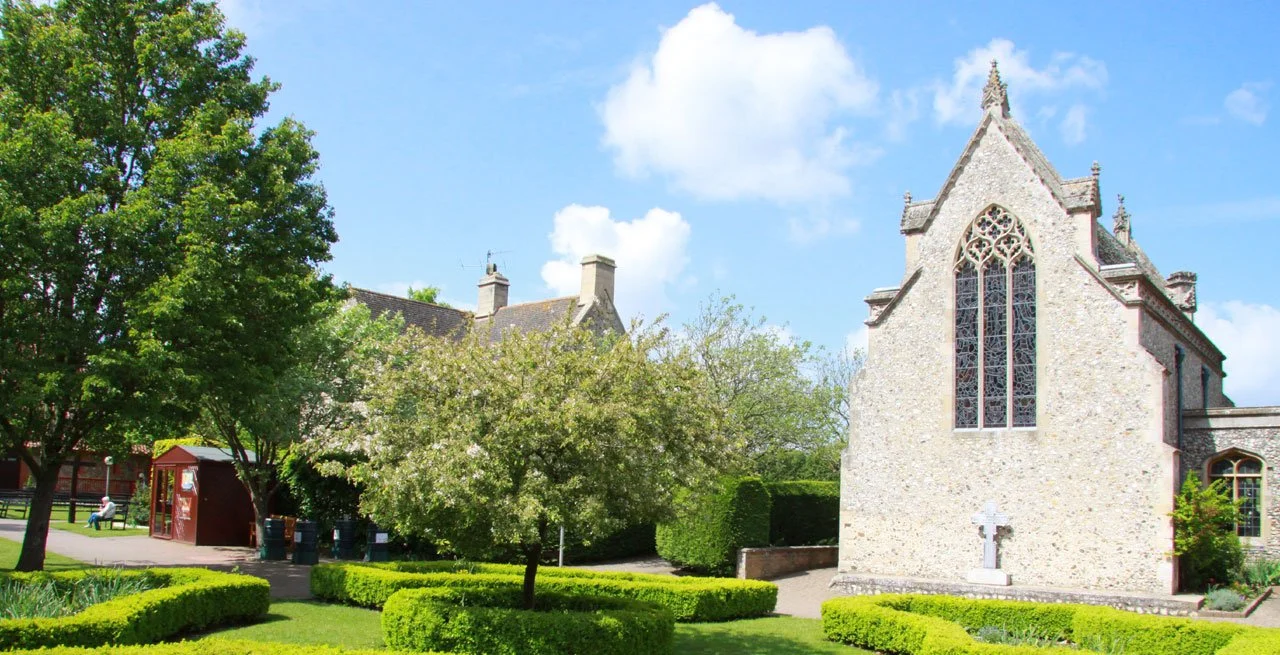
The contrast gives the visit its character: a small medieval wayside chapel alongside a larger church made for gathered pilgrims. A day here can hold both personal prayer and worship with the Church, whether you come with a petition, gratitude or an intention for someone you love.
Three places to give your attention
The Slipper Chapel
Begin with the small chapel and the statue of Our Lady of Walsingham. It was the last wayside chapel before medieval pilgrims reached the village's shrine. Allow others to approach, and give yourself time to pray. A petition can be simple: a name, a concern or a thanksgiving you have carried here. Visiting the chapel
The Chapel of Reconciliation
This is the ordinary location for the noon Pilgrim Mass. Locate it early if joining worship; the smaller Slipper Chapel is not the main public Mass venue. The different scale also lets larger pilgrimages gather without changing the spiritual focus of the visit. The Pilgrim Mass
The grounds and devotional places
The shrine's own map identifies Stations of the Cross, the candle area, the Holy Ghost Chapel, the tea room and picnic area. Choose an outdoor devotion when the weather suits it, or stay with the chapels. Use the official grounds map for the facilities and current signs on arrival for the day’s arrangements.
Worship and ordinary opening hours
Checked October 6, 2026: the shrine publishes daily grounds and chapel opening from 9 a.m. to 5 p.m., noon Pilgrim Mass, morning Rosary at 11 a.m., and afternoon Eucharistic prayer and devotions. These are local England times and an ordinary programme, not an event-specific confirmation. Daily activities
For confession, the dedicated page lists 10:30–11:45 a.m.; an accommodation information page begins the window at 11 a.m. If confession is central to your journey, check the current arrangement with the Pilgrimage Office and arrive with enough time for a queue. Confession information
The calendar should govern a major pilgrimage day. A group requesting a private Mass in the Slipper Chapel must apply ahead; the shrine considers small groups of up to 20 according to capacity, and visiting clergy need the required credentials. Private Mass requests
A shrine day, with the village optional
With only a few hours, choose chapel prayer and a single worship priority. With a village overnight, give the Abbey Grounds or another village church a separate block. The full day and overnight guide explains the walk, facilities and shorter alternatives.
Find the shrine
Catholic National Shrine, Houghton St Giles
The marker locates the Slipper Chapel. For driving, follow the shrine’s published approach and routing postcode; parking and accessible drop-off need their own directions.
Map data © OpenStreetMap contributors. This is an orientation map, not an assessed route.
Meals, toilets and an indoor pause
The Catholic shrine has its own tea room at Houghton St Giles. Its published hours are 10 a.m.–4:30 p.m. daily, checked October 6, with light lunches and refreshments. Ask about dietary requirements and group meals in advance. Closing time for the grounds does not extend food service. Tea room information
The official site map marks toilets, including a separate accessible toilet, near the shop/tea-room part of the complex. If you need particular door dimensions, a hoist or adult changing equipment, ask the shrine directly: those details are not provided on the map. The picnic area offers an outdoor meal option when the weather suits; groups bringing outside catering should read the shrine's policy.
Choose a base and finish the journey
Little Walsingham: investigate first if the village, Catholic parish church and an overnight pilgrimage are part of your visit. Elmham House is the Catholic shrine's own pilgrim hotel on Friday Market Place. It is a village property, not accommodation inside the Houghton St Giles complex. Its official booking page gives current availability and enquiries.
Fakenham: a practical comparison for a wider Norfolk journey or an onward bus connection. Include each shrine transfer in the room comparison, particularly if you plan to return for rest.
King's Lynn: can simplify the rail arrival and departure. It requires a separate road journey for the shrine day; it is not a close sanctuary base. For London, start with Great Northern's King's Cross–King's Lynn journey search.
The arrival and stay guide compares rail, local buses and arranged transport, with a dated two-night example. Accommodation suggestions are based on published information rather than personal hotel stays.
Access, families and the optional walk
For an access plan, ask the shrine about the entrance to each chapel, parking or drop-off, seating and the toilet facilities you need. The official map identifies an accessible toilet, but a step-free route through the whole visit has not been established by this guide.
The Pilgrim Way crosses countryside. Rain, surfaces and the return journey matter; ask for current advice before using it with a wheelchair, mobility scooter or pushchair. A drive to the shrine and a visit to its chapels can be your complete pilgrimage.
For children, use the site's meal and toilet stops early, and choose a short outdoor section rather than promising the whole walk. The shrine asks visitors to keep the grounds quiet, dress suitably and bring only guide/assistance dogs. Cycling and ball games are not allowed within the grounds. Visitor guidelines
Before you travel
- Save the Catholic shrine's name and Houghton St Giles address separately from your room.
- Choose the worship priority and read the current calendar.
- Settle the final transfer and the return; a village bus arrival leaves another journey.
- Arrange meals, room access and any assistance you need.
- Decide whether to add the village walk or leave it for another visit.
Sources and next steps
Primary visitor sources checked October 6, 2026. History, worship and facilities are drawn from the Catholic shrine's pages and map. Suggested days and bases are planning advice based on published information. Confirm transport, accommodation and worship arrangements for your travel date with the responsible providers.
Official sources used in this guide
- Official shrine directions
- Anglican visitor information
- The shrine's history
- Visiting the chapel
- The Pilgrim Mass
- official grounds map
- Daily activities
- Confession information
- calendar
- Private Mass requests
- Tea room information
- official booking page
- Great Northern's King's Cross–King's Lynn journey search
- Visitor guidelines